Zum Inhalt springen

The person behind the systems.

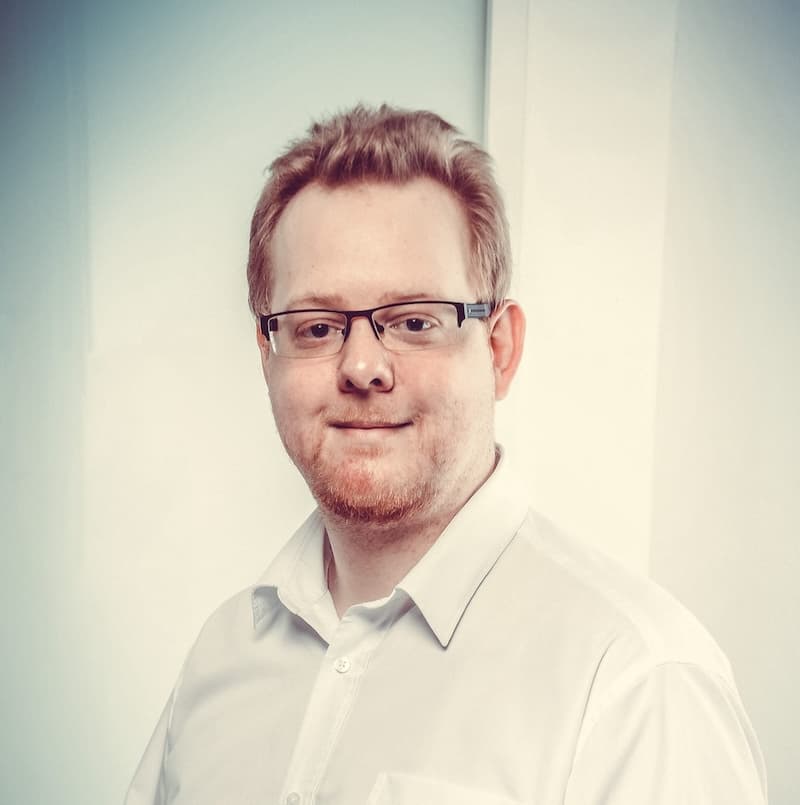
I'm Jörg Amelunxen. Over ten years in software engineering, with a focus on software architecture. I've been working with AI systems since before ChatGPT, now as an AI coach for values-driven brands. What I build solo today used to take a team just a few years ago.

My toolchain shifts every four weeks, and that pace has become home to me, not pressure.

Writing code matters less every year. What counts is knowing what should be built and what to leave out, where a brand goes quiet and where a system would break in two years if the wrong cut is made today. The judgment is the core. If you want, the finished system comes with it, the decisions already baked in. I use AI as a tool, not as a sales pitch.

With this kind of reach, the temptation would be to build for everyone. I choose, deliberately, who I work with. With companies that have a voice. And the fear of losing it as they scale. With founders in mid-sized businesses who feel their brand growing quieter as the apparatus around it grows louder. With teams for whom AI is a tool, not a goal.

What you pay for is the judgment behind it: what to build, what to leave out, and where a brand loses its voice.

What keeps me in this work: I see people too valuable to spend their days in tickets, briefs and repetition. AI doesn't belong where it replaces humans. It belongs where it gives humans back the work they were actually here to do. That's my standard. Including in the architecture nobody ever sees.
What converges here

Five disciplines, one person.

What comes together here sits, for most providers, on five different desks. Anyone building AI for SMBs can't afford that separation anymore. The transitions between fields decide whether a system holds. That's where I work.

  • Architecture

    Over ten years of practice across software engineering roles, from senior development to technical project lead. Structures that don't start grinding three months in.

  • LLM Engineering

    Language models as building blocks inside production systems. MCP servers, sub-agents and agent skills as reusable architecture. With verification steps against hallucination, with clean interfaces, with decisions you can trace.

  • Test Discipline

    Test coverage that doesn't exist for show, but for the kind of sleep you can actually take. Linting, TDD, modular architecture. Especially when no one is watching.

  • Brand Coherence

    Voice, design and copy as part of the architecture. A brand that stays the same across every output, even when the outputs come from a system.

  • AI Workflow Architecture

    An orchestration ecosystem of my own for daily work: specialised sub-agents, custom agent skills, MCP servers for tool integration. So that what I do doesn't depend on a single tool, but on a method that keeps tools replaceable.

Keeping these five fields in one person is the architectural decision that matters. Everything else follows from it.

Fractional CTO for founders without a tech head

You don't have to hire a CTO. You can borrow one.

You've got an idea, maybe already a product, but no technical co-founder and no reason to pay a full-time CTO salary. That's exactly when you don't need a second person on the team, but a technical head you can borrow: someone who carries the tech decisions, so you can stay the founder instead of moonlighting as the developer.

What that looks like

  • Architecture and build-or-buy decisions you won't regret in two years.

  • An honest read on security and scaling before your first big customer arrives.

  • A BS filter for agency quotes, dev applications and tool promises.

  • And the uncomfortable truth when the tech path you're on won't hold.

Fractional CTO, Interim CTO, outsourced CTO, technical sparring partner: call it what you like. And I'll tell you when you don't need one yet.

My Journey

1

The first spark

Wrote my first program early on. That feeling of building something functional from an empty file never left me. It turned into a computer science degree specializing in software engineering. With a minor in psychology that fascinated me at least as much as the code itself: what systems do to people, and what people do to systems.

2

From developing to software architecture

Shaping complex systems that hold up long-term. Architecture decisions that ripple for years. Software that works is a starting point. Software that someone still touches with a clear conscience five years later is a different discipline.

3

AI changes the rules

When AI hit the mainstream, one thing became visible quickly: the possibilities are huge, but small businesses in particular don't have the time to get lost in them. Everyone talks about AI. Few show how it actually grips on a Tuesday morning inside an SMB.

4

Today: Your AI coach

That's exactly where I come in. So you don't have to figure it out alone. Whether through the Freedom Plan, coaching, or custom software: technology should free up your time for the things that truly matter.

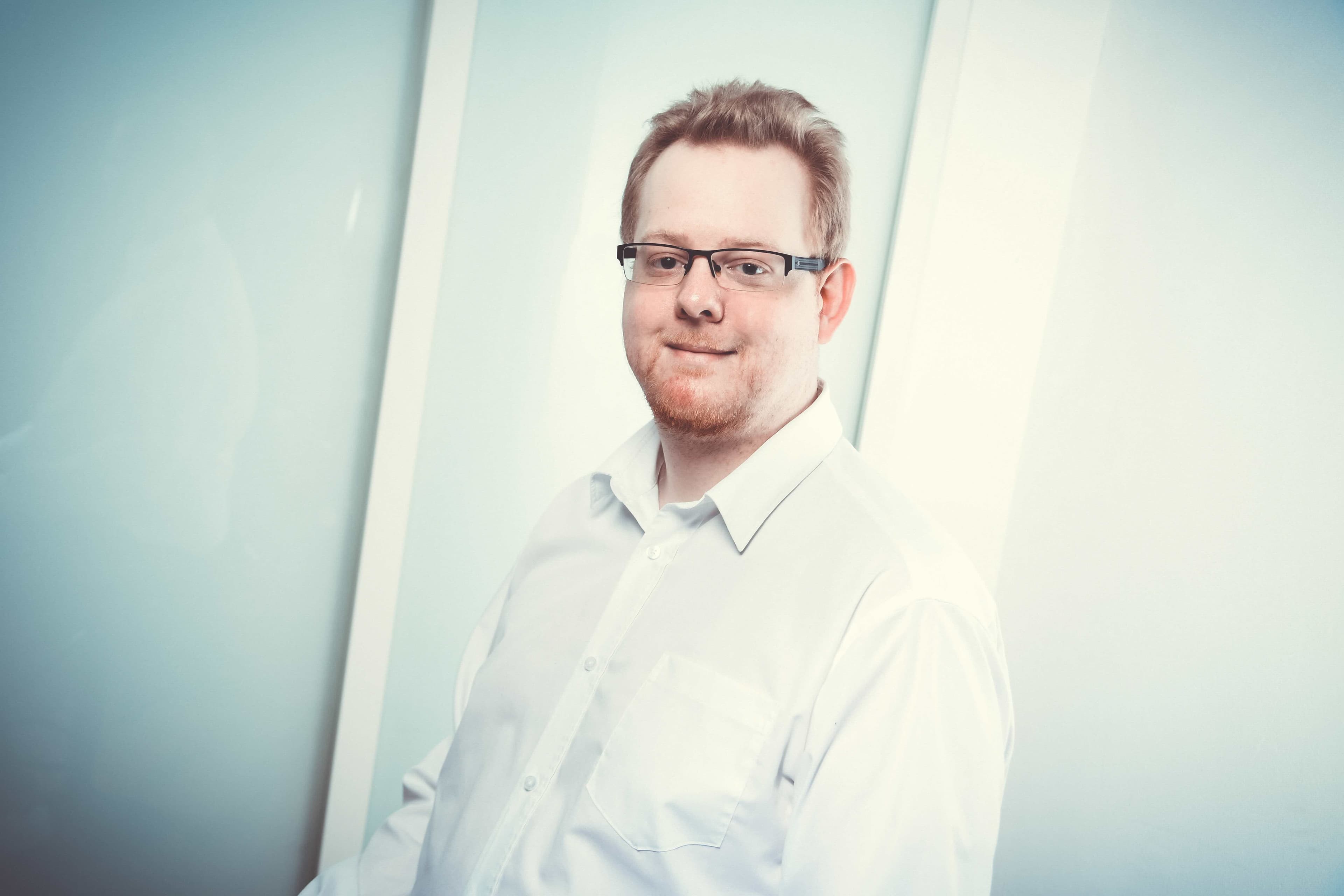
Jörg Amelunxen lehnt lässig an einem Tisch, authentisches Porträt
The break

I almost built the wrong thing

When the AI wave hit, I jumped in headfirst. I let it into everything: concepts, copy, ads. And the more I used it, the more clearly I saw something I couldn't name at first. A hole. In the communication, in the concept, in the person across from me. Everywhere a human used to be and suddenly wasn't.

What am I even building here?

It nagged at me for a while. I was part of it, after all: I was producing the average the machine spits out anytime anyway, just faster. And that was the completely wrong path.

Then I saw where this was heading. This machine is only getting started, and soon it will produce the average for free. And once the average costs nothing, all the value moves to the layer above it: the layer where the human sits, with their emotions, their weaknesses, their mistakes, and their heart.

Since then I build differently. I clear the space where only the human counts, and let the machine carry the rest. It's the measure I hold every project to today.

How I work

Pragmatism over theory

No PowerPoint strategies, no buzzword parade. What I suggest holds up in daily reality: whether in the office, the warehouse or the inbox of a growing brand. If something won't carry, I tell you before you buy it.

Your size, your budget

I don't think in enterprise dimensions. Every recommendation factors in what's realistic for you: solo, two-person team, small crew. No tool stacks that cost more than your rent.

Honesty, even when it's uncomfortable

AI can do a lot, but not everything. If a language model would water down your brand voice, or an automation suggestion would do more harm than good, I'll say so. When in doubt, one recommendation less.

One person, one system, end to end

No project tourism, no handovers, no third vendor who's lost the thread on why something was built this way. From brand voice systems to customer service to your internal founder knowledge: one companion who understands your brand and doesn't need it explained from scratch every time.

Values before efficiency

Efficiency is a side effect, not the goal. If your brand exists from conviction, every AI decision has to carry that conviction. Otherwise you gain time and lose the reason you started.

Sound like a good fit?

Away from the screen

When I'm not working on architectures or building AI workflows, you'll find me outside. Preferably in the forest. No phone, no notifications. Just walking and clearing my head. That's my balance, and honestly, the best ideas happen right there.

My second passion: films. During school and university, I worked as a projectionist at a cinema, and it never let go of me since. Great stories, powerful imagery, that moment when a film makes you completely forget where you are. That still fascinates me.

Maybe it fits together better than it seems at first: technology should create the space for you to be human. For walks, for films, for the brands you buy from on purpose because there's a person behind them who actually means it.

Technology should have your back. For your brand, your people, the places where a human has to be a human.

10+ years of software engineeringArchitecture and AI in one person

What's been on my mind

If you want to know how I think.

"I don't know a single business that has too many people. I know plenty where the people who are there are stuck in the wrong tasks."
"AI is not the solution to having too many people. AI is the solution to having too little human in the workday."

Eight observations from working with small businesses, in which I wrote down why I think the whole AI industry is asking the wrong question. If that resonates with you, it might be the most honest way for us to get to know each other before we talk.

My focus

Where I focus.

My circle is intentionally small. I work with solo founders, small teams and SMBs up to about 20 people, because that's where the places sit at which my work actually makes a difference. Anything beyond that is a different world with its own methods, its own structures, its own rules. Some of it is also ruled out by existing contractual ties on my side, but that's a side note, not the main reason. The main reason: this is where I belong, not over there.

What's just not my world
  • Classic corporate IT, ERP mega-projects, SAP landscapes, core banking systems. A discipline of its own, which others do better
  • Procurement processes with three-bid logic, vendor onboarding and corporate compliance
  • Enquiries that would already be ruled out by existing contractual ties on my side. I check those upfront and will openly let you know
  • Subcontracting for consultancies or staffing firms that resell hour quotas
  • Employee-like arrangements or body leasing into large enterprises
Where I'm at home
  • Solo founders and freelancers who want to seriously connect their work with AI solutions
  • Small teams and values-driven brands (typically up to about 20 people)
  • Mid-sized family businesses and founder-led brands with clear stance
  • Initiatives where human-to-human time is the outcome, not headcount reduction

If your enquiry belongs more to that other world, I'll say so openly and gladly point you to colleagues who fit. That's useful on both sides: you get the support that actually fits, and I stay where I can do the most.

Jörg Amelunxen, Software-Architekt

Sounds like you?

Describe your situation. I'll tell you honestly what can come of it.