 software-architecture.ai
Running software · AI agents
Running software at AI speed:How your operating cadence keeps up when the world won't slow down
3days
That is what US federal agencies got for a hole in PHP once it was officially flagged as actively exploited on October 26, 2026: a deadline of October 29. How long would it take you?
Building faster
About a third of US growth in 2026 comes from AI investment. By one Goldman Sachs estimate, it brings Europe only around 0.10 percentage points of growth in 2026.
Easier to attack
In the last days of October alone, flaws in five programs were officially flagged as actively exploited: PHP, the Linux kernel, Cisco, GitLab, Brotli. Two weeks earlier, Next.js was hit with two critical flaws.
The same technology sits behind both.
With AI the world builds faster, and with AI it finds faster what is broken. Even with one website or one small app you are running software, and you feel both.
October 26
Agency deadlines running: PHP
- 12.GitLab fixes a flaw rated CVSS 10.0
- 14.Next.js: update for two critical flaws that let strangers run code on the server
- 21.PHP: two critical flaws (CVSS 9.2), known as PHP2Shell, updates released
- 21.Germany's federal security office (BSI) issues an official warning
- 22.German states, municipalities, universities and hospitals have taken websites offline as a precaution, many are back online and secured
- 26.PHP2Shell is officially flagged as actively exploited. US federal deadline: Oct 29
- 27.A flaw in Brotli is flagged too
- 28.Linux kernel, public since May: chained with PHP2Shell it reaches root. Deadline: Oct 31
- 29.GitLab and Cisco VPN follow. Cisco deadline: Nov 1
- 29.The three-day deadline for PHP2Shell expires
- 31.The deadline for the Linux kernel expires
Sources: Rapid7, Next.js blog, Safeguard.sh, Xalgorix, dpa. Deadlines where stated.
The good news: the part you can influence sits inside your own business. And in a small business the paths are shorter than in a big one.
I call this your
operating cadence
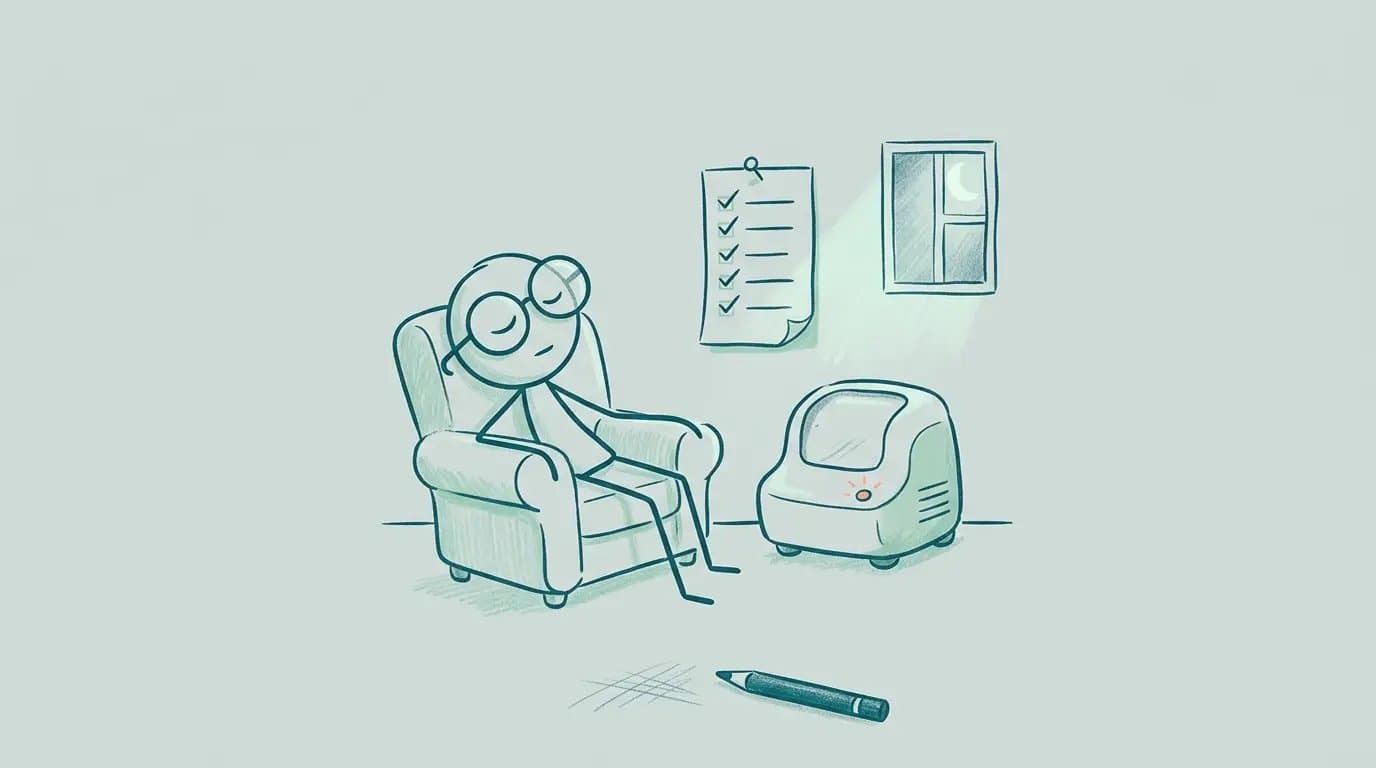
The time a security advisory takes to get through your business until the update is really live. From “somebody read it” to “it's running”. Until recently that was a monthly rhythm. Now it is turning into a daily one.
Running software now means getting the security advisory that affects you through your business in a few days.
01
What question is AI really asking your business right now?
Two questions, one after the other. First: can you build competitive software? Now: can you still run software at all?
To see why this is tipping right now, I have to pull two phases apart. Phase A is the one everybody sees. AI yes or no used to mean: am I able to build competitive software? For me that question is answered: with AI agents you can build faster today. The economic data shows the scale behind it, namely how much capital is flowing into this technology.
In the first half of 2025 alone, AI investment raised US GDP at an annualized rate of 1.3 percent, and the White House compares that to railroad building in the Industrial Revolution. It also asks right away whether a second great divergence is coming (Source: Council of Economic Advisers, 2026). That is a political paper, so feel free to keep some distance from the claim. ING estimates that about a third of US growth in 2026 comes from AI (Source: ING Economics, 2026). The global investment cycle, meanwhile, brings Europe a mean of around 0.10 percentage points of growth in 2026 (Source: Goldman Sachs, cited by Investing.com, 2026).
The job market isn't keeping up. ING calls the effect on jobs modest so far, and US entry-level hiring of graduates sits 17 percent below 2019 (Source: ING Economics, 2026). The growth comes from investment, not from jobs.

Phase B is only just starting, and it asks something else: can you run software? Keep it up, keep it safe, in a world where new holes appear faster than a monthly plan can work through them.
That includes the small company with its home-built app on its own Linux server. Maybe more so, because nobody there reads the advisories at night.
US, 2026
about ⅓ of growth from AI investment
Europe, 2026
+0.10 percentage points of growth from the global AI investment cycle
Entry-level jobs, US
−17 % graduate hiring since 2019
The two 2026 figures are different measures, so they do not share an axis: share of growth in the US, percentage points of growth in Europe.
Sources: ING Economics, August 2026. Goldman Sachs, cited by Investing.com, October 2026.
02
What happened with the PHP flaw in October 2026?
Within a few weeks several standard building blocks were hit, two flaws could be chained all the way to root, and German public bodies took their websites offline as a precaution.
On October 14, Next.js shipped a security update for two critical flaws, both “unauthenticated remote code execution”. Meaning: strangers can run code on your server without logging in (Source: Next.js, 2026).
On October 21 it was PHP's turn: two flaws with a CVSS score of 9.2 out of 10, same class, nicknamed “PHP2Shell”. PHP 8.1 and older no longer get routine updates (Source: Rapid7, 2026). The German federal security office, the BSI, issued an official warning the same day. Several German states, municipalities, agencies, universities and hospitals then took their websites offline as a precaution. Many were back up and secured the next day. The CEO of Cloudflare reported a few thousand attack attempts in the ten hours before the announcement, hundreds of thousands two hours after it, and millions by then (Source: dpa, 2026).
On October 26, the US cyber agency CISA flagged PHP2Shell as actively exploited. On the 28th a Linux kernel flaw called Fragnesia followed, public since May, with fixes available. What was new was the note that it can be chained with the PHP flaws to plant web shells and run commands as root (Source: Safeguard.sh, 2026). Around the same time came a Cisco VPN flaw and a GitLab flaw rated CVSS 10.0 (Source: Xalgorix, 2026).
What it set off for me
My own website runs on Next.js. For me these weeks were the reason to put even more agents on advisories like these, so they reach my morning feeds faster. That is easy for me to set up, because I build software for a living. A craft business whose agency built its website two years ago doesn't have that head start. There, the advisory first has to reach someone.
One more word on the three-day deadline: for PHP, eight days lay between the advisory and the deadline; the three only start at the official flag. The attacks didn't wait for it. The deadline is an example and doesn't apply to you. It still shows what an organization that tracks these flaws professionally considers reasonable.
Each of these flaws is serious on its own, and both are being actively exploited. Through the PHP flaw, strangers can run code on the server with the privileges of the web server. Through the kernel flaw, someone who already has access to the server gets further. Together they reach root, meaning full control of the server. Someone at your place only has to read that note and connect it to your servers.
PHP2Shell
Flagged Oct 26, deadline Oct 29
Linux-Kernel
Fix since May. Flagged Oct 28, deadline Oct 31
The deadline binds US federal civilian agencies. For your business it is a marker, not an obligation.
Sources: Rapid7, October 2026. Safeguard.sh, October 2026.
03
How fast do security holes have to be closed today?
Faster than your calendar. For the flaws that actually get attacked, the clock is often running before you read the advisory.
Mandiant, Google's forensics arm, estimates the mean time from patch to first exploitation in 2025 at minus seven days. Minus. So exploitation regularly starts before a patch even exists (Source: Mandiant M-Trends, 2026). VulnCheck counts 28.96 percent of the known exploited flaws of 2025 as attacked on publication day or earlier, up from 23.6 percent in 2024 (Source: VulnCheck, 2026).
And the volume is growing. Vulnerabilities disclosed per month doubled in 2026, from 5,045 in January to 10,740 in August (Source: Google Threat Intelligence Group, 2026). From January to August, 141 flaws were actively exploited, more than in all of 2025 with 127.
Before you read every advisory as an alarm: Google puts this in context itself. Only about 1 in 431 flaws disclosed in 2026 was ever seen being exploited (Source: Google Threat Intelligence Group, 2026). That is the real work: finding, among more than 10,000 advisories, the one that affects you.
What does AI have to do with it?
According to Google, exactly 50 percent of the flaws likely found by AI lead to remote code execution, against 26 percent overall (Source: Google Threat Intelligence Group, 2026). Part of Google's explanation is that research teams aim their agents at critical spots on purpose. So often it is the defenders doing the searching. Once a flaw is disclosed, the other side reads along. In Google's example, exploitation of an AI-found flaw began within four days of publication (Source: Google Threat Intelligence Group, 2026).
It is as if a note went up on the neighbourhood notice board saying which workshop door doesn't close properly. The question is who reads it first.
And the other side stopped searching only by hand a while ago. According to Flashpoint, attackers are building their own models without safeguards on private infrastructure, and even inexperienced ones can use this to send out automated scanners (Source: Flashpoint, 2026). A self-hosted model like that just runs, and it doesn't have to ask anyone's permission. These are intelligent scanners moving through the net.
That leaves two cases. By Google's count, zero-days make up 62 percent of the exploitation observed in 2026, and patching faster doesn't help against those, because no patch exists yet. What remains is what the public bodies did: take the system offline and wall it off. And expose as little as possible to the internet beforehand. But according to Google, the growth comes mainly from flaws that are already known and quickly weaponized (Source: Google Threat Intelligence Group, 2026). And there the time after the advisory matters. That time sits inside your business.
Advisories per month, 2026
- 1 in 431
- advisories exploited in 2026
- −7 days
- mean time to exploit 2025, so before the patch
- 28.96%
- of exploited flaws in 2025: on publication day or earlier
- 50% vs. 26%
- remote code execution: AI-found flaws versus all
Sources: Google Threat Intelligence Group, September 2026. Mandiant M-Trends 2026. VulnCheck 2026.
04
How does a security advisory flow through your business?
Along decision paths built for a monthly rhythm. Your operating cadence is the time from advisory to rolled-out update, and it has to come down to days.
I laid out the image of the pipes that an organization's output flows through in “From Agentic Coding to Agentic Organisation”. Now it is not just output flowing through those pipes, but a security advisory with a three-day deadline. It has to pass five stations.
Notice. Somebody has to notice the advisory at all. Who reads the security notices at your place? At night? On the weekend?
Check exposure. Do you even run this thing? Which PHP version is on the server, which Next version in the app? Could you say from memory? If your host runs PHP for you, part of this stretch belongs to them. Then the question is: have they rolled it out, and who checks?
Decide. Who gets to say: we do this now, even if it is Tuesday, 11 pm? First the advisory has to reach the person who can decide. Maybe that person wants to ask someone else. Until then nobody can roll out the update. And these decision paths now have to get incredibly fast.
Prepare and test. Does anything break? Is there a test environment? Are there tests?
Roll out. Deploy, check, a way back. And then a look at whether someone is already inside, because an update doesn't throw out anyone who settled in beforehand.
Rolling out takes minutes. Everything before it takes days.
What admins call patch management starts, for you, long before the patch. Specialists measure this stretch as mean time to remediate. I call it your operating cadence, because it concerns your business and not just the technology.
Part of that stretch has long run on classic tools: dependency scanners, automatic update suggestions, tests. AI agents take on what lies between them: sorting, writing the note, preparing the update. Without automation you will struggle to keep up at this pace.
Work through it yourself below. The values are a model. Watch where the time gets stuck.
Flip the switches yourself
How long does an advisory take to get through your business?
1Notice
Who reads the advisory, even at night?
3 days2Check exposure
Do you even run this thing?
1 days3Decide
Who gets to say: now?
2 days4Prepare and test
Does anything break?
2 days5Roll out
Deploy, check, a way back
12 h
Your operating cadence
8.5 days
above the three-day mark · Biggest block right now: Notice
Model values, not a measurement. A day counts as 24 hours here. The marks come from Rapid7 and Mandiant.
05
How do you build an operating cadence that keeps up without leaving everything to AI?
AI agents handle watching, sorting and preparing. People who know the trade decide and roll out. Four building blocks.
AI-supported doesn't mean AI-abandoned. You can't just say: hey AI, go manage my infrastructure. That is a very bad idea. Of course there have to be people involved who know the trade and know what they are doing, and who watch over these agentic pipelines.
Google recommends a clear basic pattern: away from unfiltered mass patching, toward sorting by real threat, combined with automated, agentic remediation (Source: Google Threat Intelligence Group, 2026). I work with four building blocks, and the fourth belongs to a human.
1. Inventory
An agent keeps the list of what runs at your place: PHP version, framework version, kernel, Node, libraries. No 200-page document, just a list the agent keeps current itself. Without this step the rest doesn't work.
2. Matching
An agent reads security notices and reports of actively exploited flaws and matches them against your inventory. What comes out isn't a flood but an exposure note: “PHP 8.3.30 on server X is affected, the update is 8.3.36, risk: outside code without login, already being actively exploited.” Ready to read.
3. Preparation
The agent prepares the update: branch, version bump, test run in the test environment, report.
4. Decision rights, in advance
Decide in advance which person who knows the trade makes the call and who covers for them, on your team or from outside. They read the note and check the test report. Then they roll out the update at the press of a button, hold it back, or take the system offline if no update exists yet. With a three-day deadline, the note can wait until morning.
No human gets automated away here. Nobody in a small business reads more than 10,000 advisories a month anyway. Now the relevant one arrives, and a human has a clear head for the decision that counts. And running software stays a process you never finish. What that means when the software itself is an AI solution is in the article on LLMOps for small businesses: the day after the demo is the day the work starts.
What this looks like
Take a small agency, made up: three people, twelve client websites on PHP. With a slow operating cadence, someone reads about the flaw in the paper on Monday. Tuesday, someone asks which versions are running. Wednesday the answer comes, Thursday they patch, two sites break, Friday rollback.
With a fast operating cadence, the agent's note arrives Tuesday evening, with all twelve version numbers and prepared updates. Two sites already broke in the test run, and the note says so. Wednesday morning the owner checks and presses ten times. Done by noon, the other two by evening.
Agent
10,740 advisories a month
- Keep the inventory current
- Match advisories against it
- Prepare update and test run
Human who knows the trade
One decision
- Read the note and test report
- Decide: now, later, offline
- Press the button
Qualitative figure: my conviction from my own work, not a study.
10,740 advisories in August 2026: Google Threat Intelligence Group.
06
Can you still answer for your operations without AI in the process?
Without automation, less and less. The old caution is becoming a risk of its own, and pouring AI over everything remains one. Between them runs a narrow ridge.
Until now the logic went: AI is a slop machine, it churns out mediocrity by the ton. If I use too much AI, I can't answer for it, because only slop comes out. That attitude is now getting dangerous. It was never wrong, the slop machine didn't come from nowhere. But the world doesn't slow down because you do.
On the left is one ditch: pour AI over everything, let the agent manage the infrastructure. On the right the other: do everything very slowly, discuss every update three times, caution as a virtue. That used to be right. Today it means an operating cadence of weeks in a world with deadlines of days.
Between them runs the ridge: agents watch, humans decide. That takes no panic mode and no unconditional charge forward, just one realisation: you aren't alone in the room, and what happens outside calls for a response.
If an agency or a host built your website, you don't need an agent just yet. You need three answers in writing: Who rolls out security updates? Within what deadline? Who tells you? For everyone else: take one hour and a sheet of paper. Three questions: What runs at your place? Who finds out when it burns? Who gets to press? If you can't answer one of them, you have found your first building block.
The list of flaws will be longer again next week. The only question is whether anyone at your place is listening.
The world doesn't slow down because you do.
Left ditch
Pour AI over everything. The agent runs the infrastructure.
The ridge
Agents watch. Humans decide.
Right ditch
Discuss every update three times. Cadence: weeks.
Related to This Topic
Get the free Getting Started Guide: 10 concrete ways to start using AI productively tomorrow.
Did this article spark an idea? Let's find out which Sinnvampire can disappear for you.