 software-architecture.ai
Vibe Coding: what it is, when it holds, and when you need real architecture
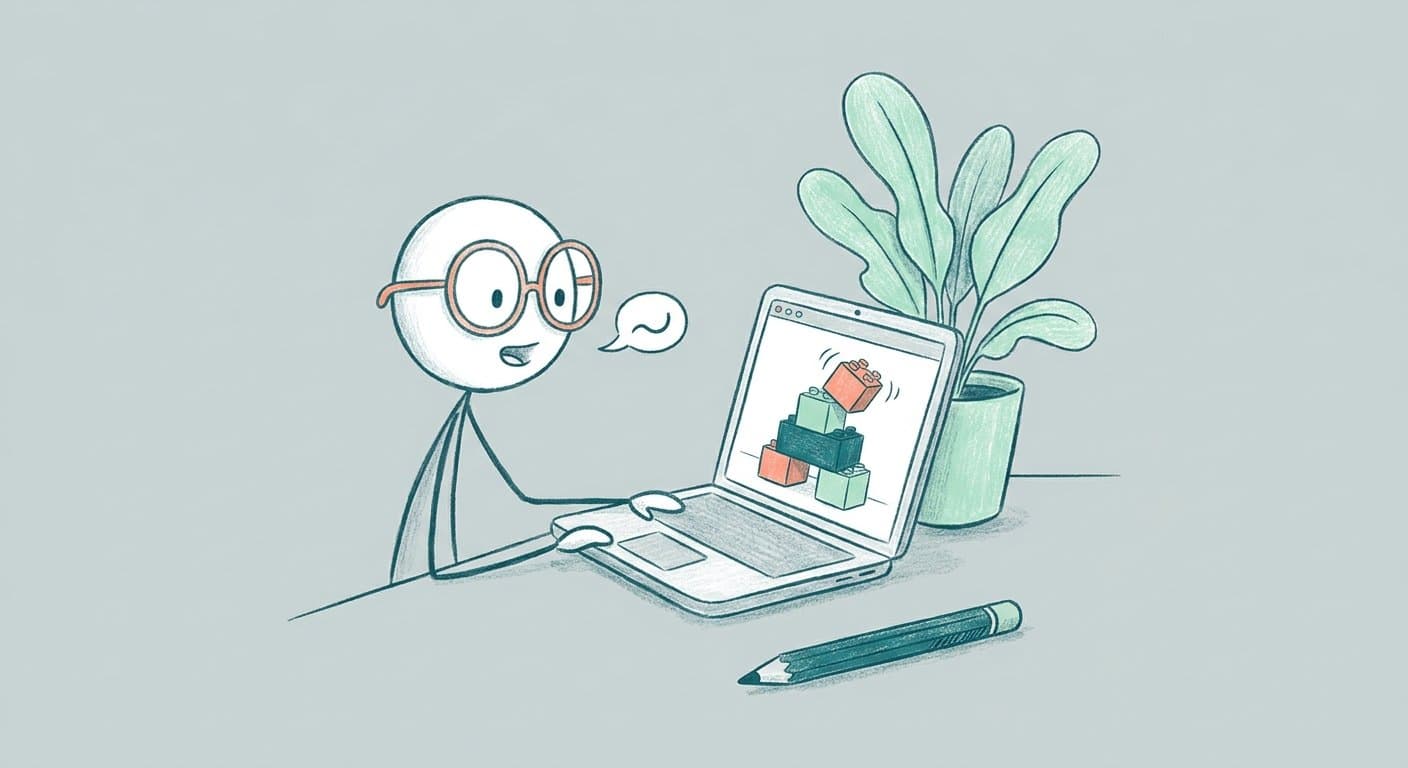
You probably ran into the term in a video first: someone talks to an AI in plain language, and at the end there is an app that runs. No code, no team, one afternoon. It is called “vibe coding,” and in 2025 the term slipped out of the developer corner into the mainstream. The question that rarely gets answered: what exactly is it, and what happens to it once the first magic wears off?
Vibe coding
Building software by describing what you want in plain language and letting an AI write and wire up the code, instead of writing it line by line yourself.
What is vibe coding?
Vibe coding shifts the role you play when building software. You used to have to speak the machine’s language: syntax, loops, data structures. With vibe coding you describe, in your own words, what should exist, and a language model translates that into working code. You say what you want. The AI handles the how.
The term comes from the developer scene and originally meant a loose, feel-driven way of programming with AI support, almost like sketching. In 2025 it became the mainstream word for a whole wave of tools that let people without a programming background build something that works. That is exactly what makes it interesting for small businesses: the barrier to turning an idea into something clickable has dropped dramatically.
How vibe coding works
At its core it is a loop of describing, building, and refining:
- You describe. In plain language: “Build me a page where customers can pick an appointment and leave their details.”
- The AI builds. The tool generates the interface, the logic, and often a database too, and shows you a result you can look at right away.
- You refine. You say what is off, the AI fixes it. That round repeats until it feels right.
The decisive part is the third round. As long as you can describe what you want, you get surprisingly far. It gets hard where you no longer quite know what you actually need, or where what the AI built looks different under the hood than you think.
When vibe coding holds, and when it does not
Almost every vibe coding tool builds you something that runs today. The question is not whether it manages a demo, but whether it holds for your concrete case. Pick the situation closest to yours:
Does vibe coding hold for your case?
Pick the situation closest to yours.
Fast and disposable. Exactly what vibe coding is made for. Build it, learn from it, throw it away if you must.
The line almost always runs along two questions: who owns what you built in the end? And does the tool keep you close to your judgment, or take the thinking off your hands and hand you back output you cannot defend?
Vibe coding gets you fast to something that runs. Whether you own it and it holds is decided only when you genuinely build on it.
Vibe coding for SMBs: the honest view
For a small business, vibe coding is a real gift in the right places and a trap in the wrong ones. It pays to know both.
Where it holds: validating an idea fast before you commit money. Building an internal tool only your team uses. Showing a prototype that triggers a decision. Anywhere speed and disposability matter, vibe coding is strong.
Where you should look closer: as soon as real customers, sensitive data, or money are involved, and as soon as you need to be sure that what you built can still change tomorrow, the discipline the fast build likes to skip comes back: architecture, tests, ownership of the code. That is not bureaucracy, those are the guardrails that make speed sustainable. Why professional standards become more important with AI rather than obsolete, I unpack in “Beyond Vibe Coding”.
Two risks are easy to underestimate here. The first is security: rely blindly on the language model and you easily miss a flaw the AI built in. For anything that does not just run internally but sits open on the web, a single overlooked flaw can be enough. Vibe-coded products do get successfully attacked, simply because nobody with a technical eye looked at it. The second is foresight: you hand the architecture decisions to the AI. A human gives you no guarantee either, but an experienced person weighs the trade-offs deliberately and decides in a structured way, with where you are headed in mind. The AI, by contrast, optimizes for the application in front of it right now, not for the one you will need in six months. And that is rarely the same application.
The good news: it is not either-or, and none of it is wasted. What you vibe-coded is the best blueprint a real project can have. A working prototype shows in black and white what the software needs to do, and saves the slow requirements phase. From there, a solid version that you own can be built.
And if you do not want to rebuild yet but first want to be sure: before you take something vibe-coded live, an audit pays off. A close look at architecture, ownership, and security that tells you honestly what holds and where it will wobble later. Both, the full build on top of your prototype and the audit before it, are things I offer. Just reach out.
The tools behind it
The landscape changes every quarter, and the usual “best of” lists mostly name the same five products you already know. The more interesting question is the one that only shows up after the demo. I judged five underrated tools by exactly that, in “5 under-the-radar vibe coding tools”, sorted by ownership and craft-proximity instead of by feature list.
Frequently asked questions about vibe coding
Do I own the code the AI builds?
It helps to separate two things: who controls the code and who owns it. Control is the practical side: does the tool give you the code as a real, exportable project you can take with you and have a developer carry forward? Or does it host your product on its infrastructure, so you are essentially renting it back? You clarify that at the tool.
Ownership is the legal side, and it is trickier (not legal advice, I’m not a lawyer, as of 2026). In Germany and the EU, copyright only protects a person’s own intellectual creation (§2 UrhG). Purely machine-generated code with no real human creative contribution falls outside it. In the US, the Copyright Office and the courts likewise require human authorship, purely AI-generated material is not protected. In plain terms: code that just falls out of a prompt may not be yours in any copyright sense. You cannot claim it exclusively, and others might be free to take it.
This is exactly where having a human in the process pays off again, legally too. The more real human decisions go in, and the more your specification is authored and reviewed in human hands, the more likely there is a protectable creative contribution at all, and the clearer it is that the result is yours. Keeping the specification and the architecture in your hands secures not just quality but also your claim to your own contribution in the process.
What is the difference between vibe coding and no-code?
No-code works with prefabricated blocks you assemble by clicking, on fixed rails. Vibe coding has an AI write real code based on your description, which is in principle freely flexible. No-code is more predictable, vibe coding more open, but harder to see through when something breaks.
Vibe coding or real software development, which do I need?
For validation, prototypes, and internal helpers, vibe coding is often perfectly enough. Once paying customers, sensitive data, or long-term maintainability come in, you need the discipline of real software development. The smart path is usually: start with vibe coding, switch to a solid foundation at the transition into the serious case.
Do I need programming knowledge for vibe coding?
To get started, no. What you need is clarity about what you actually want, and a sense of when to stop describing and start deciding. That is less a technical skill than an entrepreneurial one.
Is software built with vibe coding secure?
Not automatically. AI-generated code can miss edge cases or build in gaps that only surface under certain conditions. For an internal toy that is survivable; for anything with real user data, an expert review belongs in the process before it goes live.
What this means for you
Vibe coding is neither hype nor a cure-all, it is a tool with a clear range of use. It shortens the distance between your idea and something you can touch, and that is worth a lot. The one question to remember: when the vibe ends, do you own what you built, and can you carry it forward?
That gap, between a prototype that demos well and a product that survives its first real change, is exactly where I work. If you have put something together that is starting to wobble, or you want to pick the right category before you build the wrong thing twice, let us talk about custom software development. I would look forward to it.
If your AI-built app is already wobbling, making vibe coding hold is the direct path: from the Production Readiness Check to a production-ready rebuild.
Related to This Topic
Get the free Getting Started Guide: 10 concrete ways to start using AI productively tomorrow.
Did this article spark an idea? Let's find out which Sinnvampire can disappear for you.