 software-architecture.ai
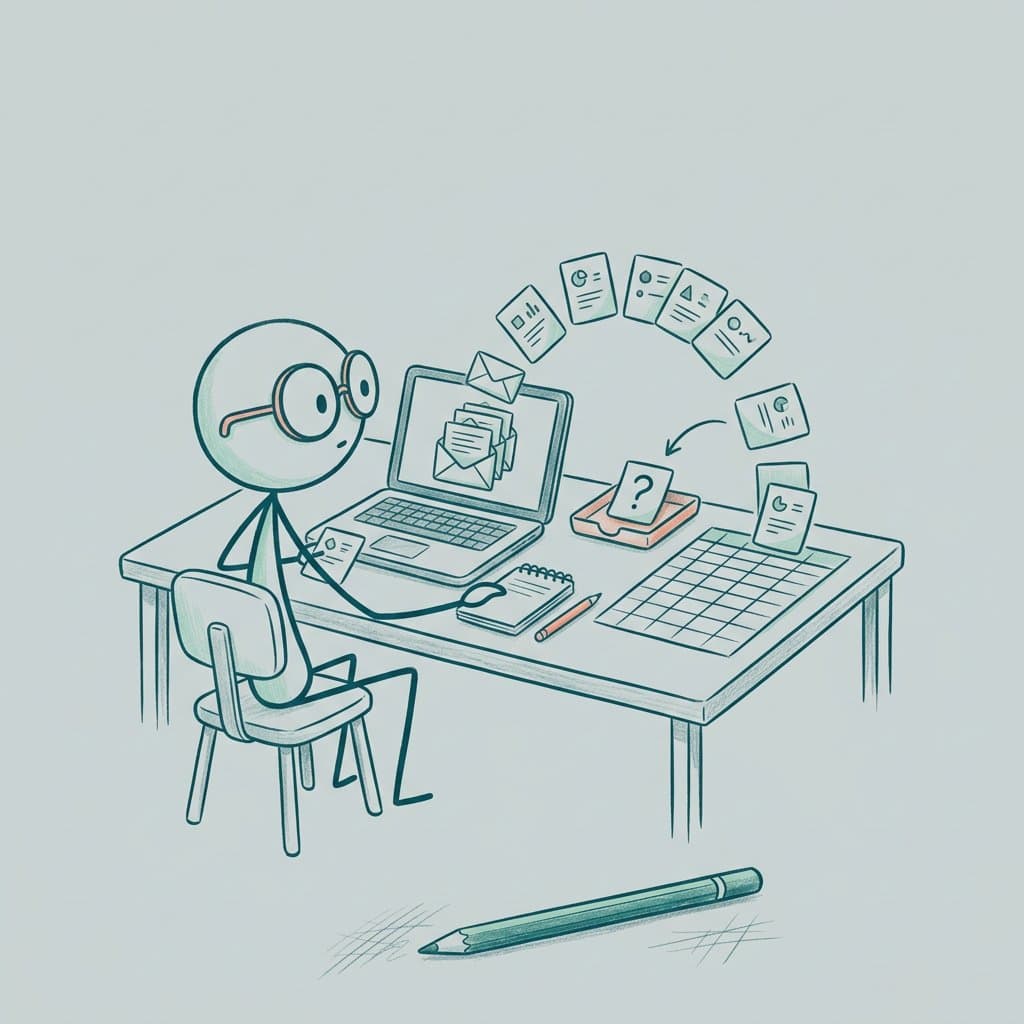
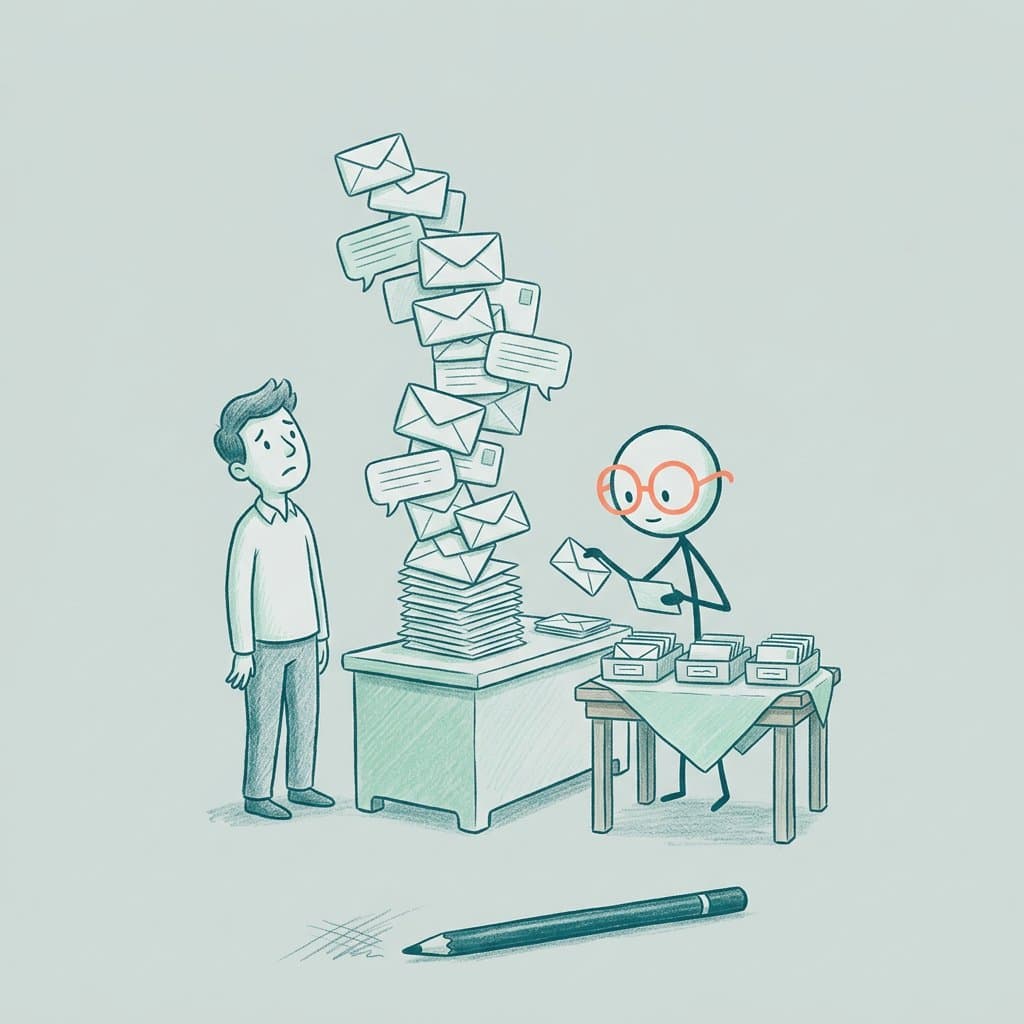
A key person resigns, and their knowledge walks out with them.
When the knowledge-holder leaves: the knowledge resigns too

Short answer
When a key person leaves, you do not just lose a pair of hands. You lose the hard-won judgment that was never written down because nobody thought it needed to be. The window in which that knowledge is still reachable opens with the resignation and closes on the last day.
The scene you dread
Jonas (fictitious name) runs a vegan cosmetics brand, eleven people. Monday morning, Pia's (fictitious name) resignation letter is on his desk. Pia was employee number one. Purchasing, suppliers, quality control, all her territory since day one. She leaves in three months.
Jonas feels relieved at first: three months, that is plenty of time. Then he sits down to write out what Pia actually knows. And realizes he cannot.
Which backup filler steps in when the main supplier botches a batch: Pia knows, it is written nowhere. How to spot a raw-material delivery you should reject before it hits production: Pia sees it, she could not explain it. How to handle the difficult packaging supplier so he ships instead of stalls: Pia has a feel for it. A feel does not fit on a handover checklist.
Three months sounds like a lot. It is not. Because nobody starts right away, and the part that needs handing over is exactly the part that is hardest to put into words.
Why this is a different problem from „everything runs through the founder“
There is the case where you are the bottleneck: your team asks you eleven times a day because only you know the answer. That is a steady state. It is annoying, but it is stable. You are there.
A key person's departure is the opposite of stable. It is a cliff. Everything runs smoothly up to a date. The day after, the knowledge is gone, not reduced, gone. The difference is not gradual. It is a drop.
Knowledge researcher David DeLong made the point in his book „Lost Knowledge“: companies treat their people's knowledge as if it were immortal, and only discover at the exit that it hung on a single person. Software has a plain name for this: the bus factor, the number of people who would have to be out before an area grinds to a halt. For critical experience, the bus factor is often one. And nobody measures it until the one resigns.
The three phases of the loss
The loss does not happen on the last day. It runs in three phases, and the most dangerous one feels like safety.
Phase 1: the false calm
As long as the person is there, nobody sees the risk. Pia does her job well, so it never stands out that only she can do it. The bus factor sits at one, but it sits on no dashboard.
Phase 2: the three-month window
The resignation opens the only window in which the knowledge is still alive and answerable. That window almost always gets wasted. The person is half out the door mentally, daily work eats the weeks, the handover gets pushed to „we'll get to it“ until two days are left.
Phase 3: the cliff and the valley
The new person inherits folders, logins, documents. What they do not inherit are the judgments. They will spend a year making mistakes Pia never would have made, not from incompetence, but because the experience that was never handed over is missing.
What many get wrong
- The handover checklist on the last day. It captures facts, passwords, contacts, file locations, not judgments. The why, the actual value, is on no checklist.
- „Just write down everything you know.“ An impossible task. Experience is precisely what you cannot articulate without a prompt. The result is a documentation marathon that records the obvious and misses the valuable.
- Letting the successor shadow for two weeks. Shadowing only captures what happens to occur in those two weeks. The rare crisis, the supplier who escalates once a quarter, falls through the cracks.
- The exit interview. An HR form with the wrong questions, too late, too generic. It logs why someone leaves, not what they know.
- Bringing the leaver back as an expensive consultant. Works once or twice, is costly, and does not hold. By the third call nobody picks up.
How to solve it: use the window before it closes
The solution is not a documentation marathon and not a tool over a folder. It has three movements, and all three hinge on timing. The chart shows what is at stake: without a handover, knowledge drops to almost zero on the last day and then crawls along a long valley. Use the window, and the drop becomes a dip.
Knowledge over time
Three movements inside the window
- 01
Decision replay instead of “write it all down”
- 02
Read the archive (the person's email, chat, tickets)
- 03
Onboarding lift (the system catches the newcomer)
First movement: decision replay instead of a documentation marathon. Not „write down what you know“, but: let us walk through the last twenty real decisions you made and surface the why behind each. Experience comes out in the context of a concrete decision, not in a vacuum.
Second movement: read the archive. The last twelve months of the departing person's email, chat, and tickets are often sharper than any interview, because the judgment already sits there in real sentences, made under real pressure. That treasure stays even after the person leaves, and even if they stop cooperating.
Third movement: store the knowledge so the new person can query it. Not as a dead PDF, but as a system that responds to a situation with „here is how this was decided before, and here is why“. The newcomer builds on it instead of crossing the valley blind.
The knowledge itself is held in four separate layers, so the system does not merely find that a supplier sits in Portugal but knows why it was kept: values decisions as yes-no patterns, context as a network of connections, rules of thumb as actual rules, experience memory as a record of what was already tried. In practice, three documented wrong calls sharpen the system more than ten wins.
When you do NOT need this
- When the role is already covered twice and two people can do the same thing. Then your bus factor is already above one.
- When it is pure routine knowledge that has long been documented. Then you have ordinary onboarding, not a continuity risk.
- When the departure is a chance to cut old habits. Sometimes the knowledge is outdated and would be expensive to preserve.
- When you have lots of time, the person is motivated, and much is already half documented. Then a clean internal handover is enough.
How we solve it, specifically
This is a departure-triggered deployment of the Founder Knowledge Engine. The promise stays the same: mirror, do not clone. Nobody is replaced, and nobody is copied. The point is to keep the judgment the person built visible and usable, so the team is not left stranded when they go. The system reflects how the person decided in the past, so the successor can build on it instead of starting from zero.
The difference from the steady-bottleneck case is timing: here the inventory is time-critical. Start it while the person is still in the building, not on the last day.
Founder Knowledge Engine
mirror, do not cloneKnowledge Inventory
- Two 90-minute remote decision-replay sessions with the departing person
- A risk-weighted layer map (values, context, heuristics, experience)
- A prioritized list of levers
- A structured documentation set
Even two weeks beats nothing, but the three-month window is the real lever. The engine build then picks up where the inventory left off.
Frequently asked questions
- How early before a departure should you start?
- As early as possible, ideally the day the resignation lands. The window is the lever, not the method. Start on the last day and you save facts while losing judgments.
- What if the person is already gone?
- Then the archive remains, email, chat, tickets, plus reconstruction through the people who worked with them. More expensive and patchier than the open window, but not zero.
- What if the person leaves on bad terms or will not cooperate?
- The archive method works without their active help. Interviews are then not the source, but the written record is.
- Is this not the same as onboarding documentation?
- No. Onboarding docs capture facts for normal operation. This is about one specific person's judgment knowledge under time pressure, exactly what standard docs never contain.
All names of individuals and companies used in this use case are fictitious. Any resemblance to real persons or businesses is purely coincidental and unintentional. The examples are provided solely for illustrative purposes.