 software-architecture.ai
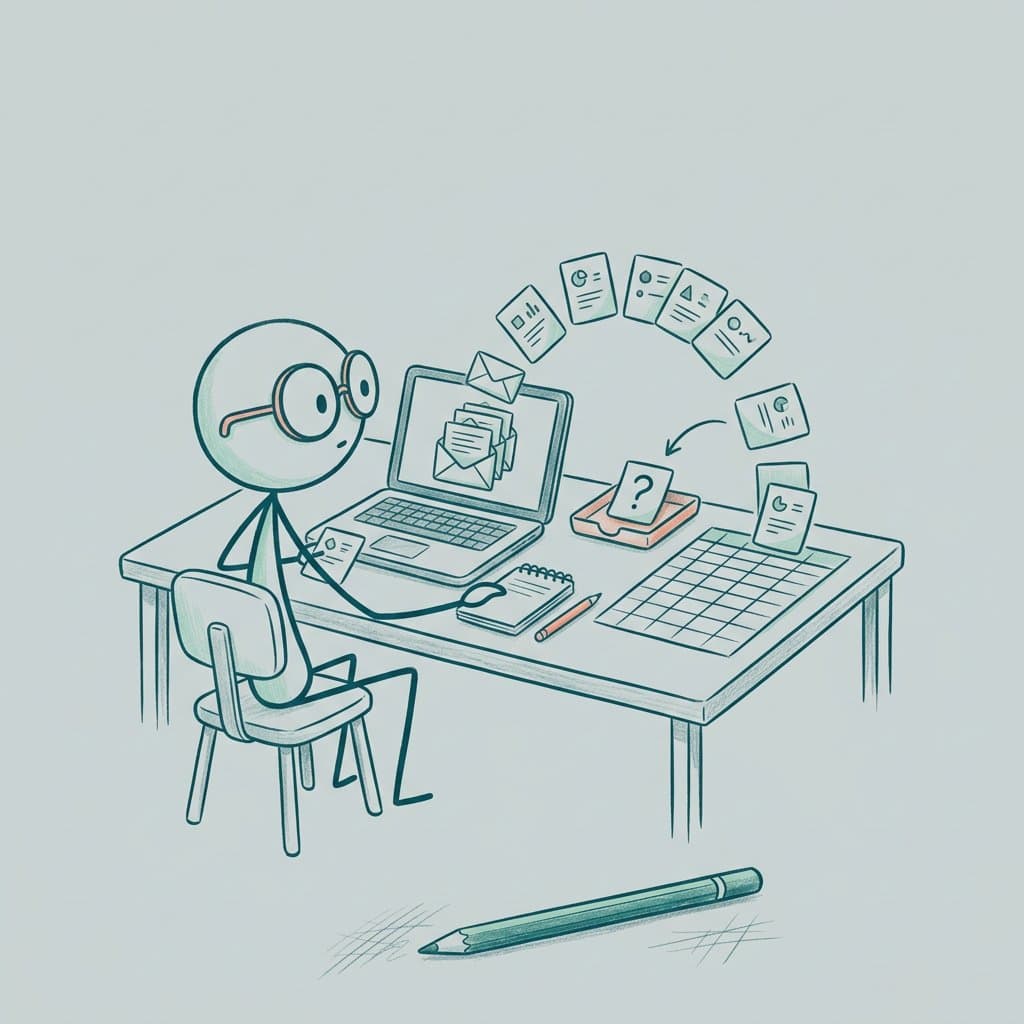
Your company's most important knowledge lives in one head only.
Securing tribal knowledge: when the most important things live in one head
Short answer
Tribal knowledge is the hard-won, undocumented know-how that one person uses to make good decisions without ever writing it down. As long as it stays in one head, it is your company's most valuable unsecured asset and its single biggest risk.
The scene you know
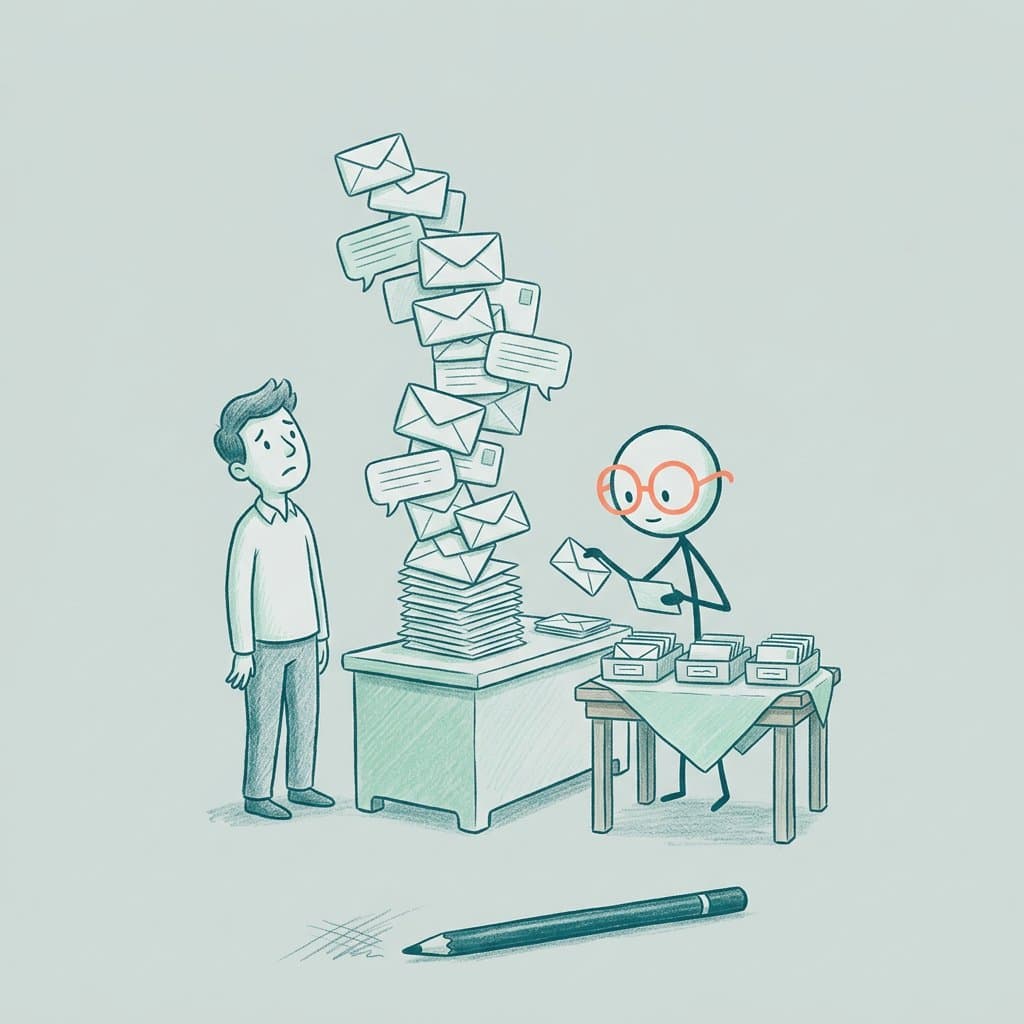
Maren (fictitious name) runs a sustainable-packaging shop, nine people. Tuesday, 11 a.m., she is on a customer call. Slack piles up: “What was our volume discount again above 5,000 units?” “Customer is asking about the eco certificate, where is it?” “How did you word last year's price increase to existing clients?”
Each question costs Maren two minutes. But they pull her out of focus eleven times a day, and her team waits hours each time. Maren has become the human search engine of her own company. Nobody planned it. It just grew, one answer at a time, until the whole business hangs on one head.
What tribal knowledge actually is
Philosopher Michael Polanyi put it in one line: “We can know more than we can tell.” You can spot a good supplier in a two-minute call, but if someone asks how exactly, you stall. The criterion is there. It just never moved from your gut into words.
That is tribal knowledge, also called tacit or organizational knowledge: not the facts sitting in your documents, but the judgments you make without noticing you make them. Why this producer and not the cheaper one. Why this complaint gets escalated and that one does not. Why your tone in a crisis is the way it is.
Knowledge-conversion research (Nonaka and Takeuchi, the SECI model) calls the key step externalization: turning tacit knowledge into a form others can work with. This is not an IT problem. It is translation work, and it can be done.
Why one head as storage is dangerous
As long as your experience lives only in you, your company is a single point of failure. Not dramatic, just quiet. It shows up in three places.
Relief
Your team asks you, not a system. You get messaged after hours because only you know the answer. Each interruption is small. Together they eat your head and your day.
Continuity
When the knowledge-holder leaves, the knowledge leaves too. A key person quits or retires, and suddenly nobody remembers why that supplier was kept. This is the most expensive moment, the one where tribal knowledge walks out the door.
Consistency
Without you, the team decides differently. When you are away, answers drift. The tone is off, the values call lands differently than you would have made it. The brand loses its edge the moment you leave the room.
What most people get wrong
- The wiki nobody maintains. It becomes a graveyard of stale pages. Knowledge nobody can retrieve does not really exist.
- “Just put a tool on top.” A search index over all your documents finds that the supplier is in Portugal, not why. The reasoning, the actual value, is rarely in the document. It is in your head.
- The clone bot. An AI system pretending to be the founder devalues the person and makes calls nobody authorized.
- The onboarding PDF. Read on day one, forgotten by day three.
How to solve it: four knowledge layers, not one pile of documents
The solution is not a chatbot over a folder. It separates four kinds of knowledge and treats each differently. Try it below: type a question or pick an example, and see which layer it gets routed to.
Or try an example:
Values decisions
yes-no patterns, rule logic
Context
the why, as a knowledge graph
Heuristics
rules of thumb, decision rules
Experience memory
what was already tried
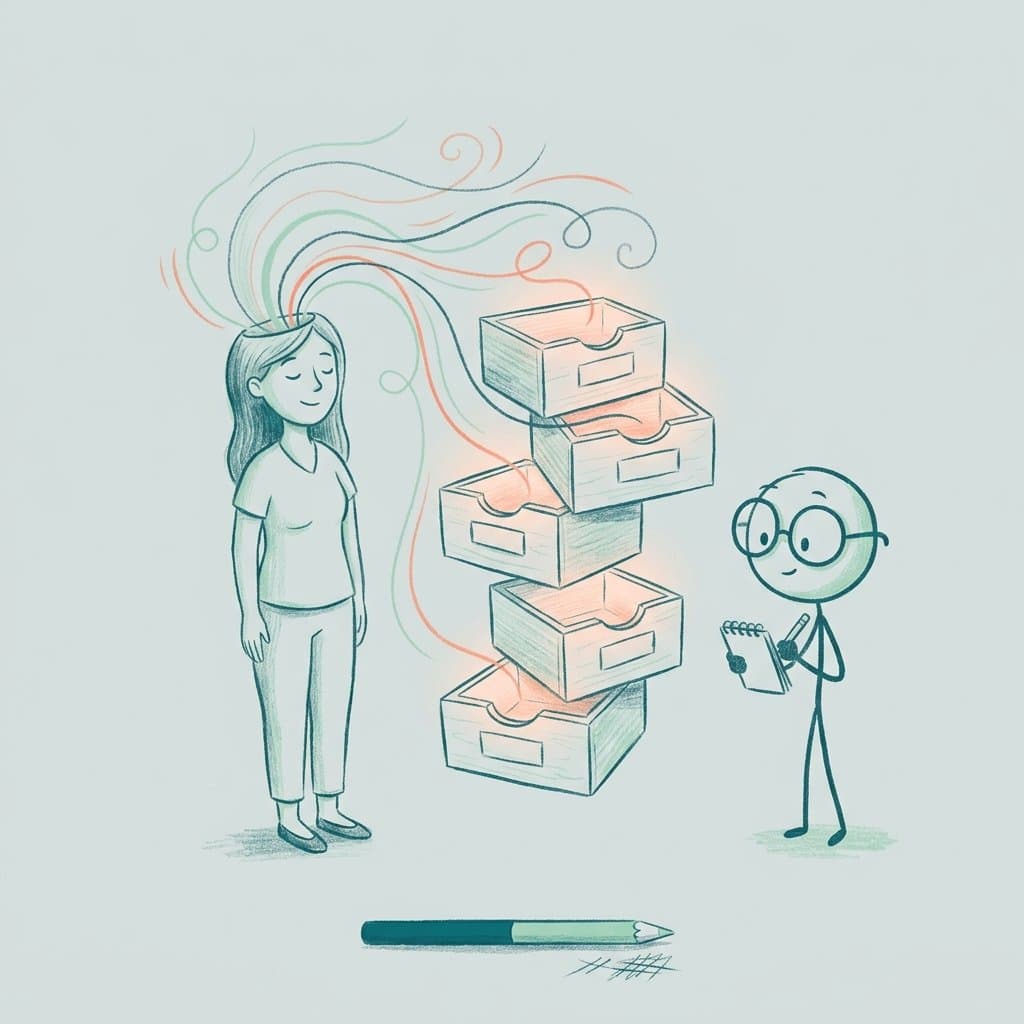
The difference from plain search: the system knows why, not just that. Values decisions are held as explicit yes-no patterns, context as a network of connections (decision, supplier, material), rules of thumb as actual rules. Only then does it answer the question behind the question.
The knowledge is captured through guided interviews, an honest read of the last twelve months of email and chat (often sharper than any interview, because your gut shows up there in real sentences), and a small negative library: in practice, three wrong calls with their reasoning sharpen the system more than ten wins.
When you do NOT need this
- When your document volume is tiny and your team small enough that a maintained wiki is enough. Then this is over-engineered.
- When your knowledge is already documented and used. Then you have a search problem, not a knowledge problem.
- When you want the software to decide. This system mirrors, it does not replace.
How we solve it, specifically
This is the Founder Knowledge Engine. The promise is explicit: mirror, do not clone. The system reflects how you would have decided yesterday, so team and tools can build on it today. What you decide tomorrow stays yours.
Founder Knowledge Engine
mirror, do not cloneKnowledge Inventory
- Two 90-minute remote interviews
- A risk-weighted layer map (values, context, heuristics, experience)
- A prioritized list of levers
- A structured documentation set
Then a pilot with one person over three to four weeks who uses the system and logs the gaps. Roll-out only once it holds.
Frequently asked questions
- What is the difference between tribal knowledge and documentation?
- Documentation is what is already written down. Tribal knowledge is the experienced judgment a person uses without ever having put it into words. The second one is the valuable and the endangered part.
- How do you capture tribal knowledge without cloning the person?
- By mapping their decision patterns (how they would have decided yesterday), not replacing the person. The person stays the authority for new decisions.
- Is this worth it for a small team?
- Yes, if one person is the knowledge hub and the team keeps blocking on them. No, if knowledge is already distributed and documented.
All names of individuals and companies used in this use case are fictitious. Any resemblance to real persons or businesses is purely coincidental and unintentional. The examples are provided solely for illustrative purposes.